The Raised Bed Swap: Why I traded wood for metal
This post contains affiliate links. If you make a purchase through these links, I may earn a small commission at no extra cost to you. Thank you for supporting Lauren Grows Home!
There is a specific kind of heartbreak that comes with watching a wooden garden bed - one you spent time building and leveling-start to bow and rot after just a few seasons. While I technically moved in to wood-raised-bed gardening, I embraced it and enjoyed it - while also seeing the pitfalls. The reality of gardening is often less about the aesthetic and more about what actually survives the elements.
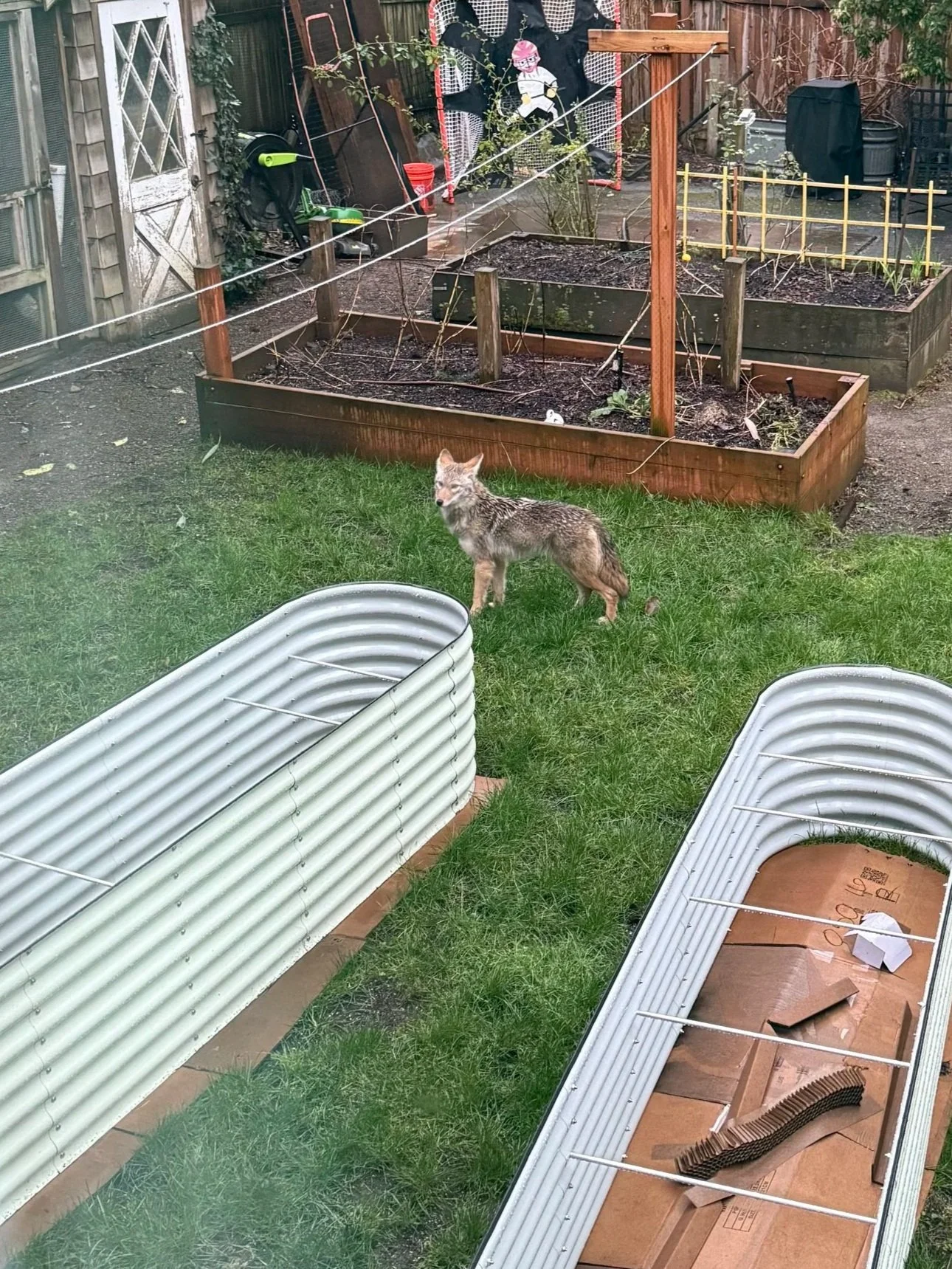
Lately, I’ve been stripping out my old wood-sided beds and replacing them with metal. While wood looks classic, metal is just… easier. It doesn't warp under the pressure of wet soil, and it doesn't provide a damp, rotting buffet for slugs and earwigs to hide in during the rainy months. Plus, assembling a metal kit is a logistically easier task for me compared to an afternoon of measuring and cutting lumber. Delivered right to my house - each raised bed took a few hours to assemble.
The only downside to making the switch to metal? These beds are deeper than their wooden counterparts. If you try to fill a 23-inch deep metal bed with bags of premium organic soil, you’ll spend a small fortune before you even buy a single seed.
(Right: A coyote visitor in our backyard this past winter!)
To get around that, I’ve researched and decided on a layering method that is as much about recycling as it is about gardening. Instead of a solid block of dirt, I treat the bed like a slow-cooking compost pile.
I start by lining the very bottom with plain brown cardboard to smother the grass, just make sure you’ve cleared off the packing tape first. On top of that, I go heavy on the "bulk." I’m talking old logs, fallen branches and sticks. It feels wrong to put a literal tree limb in your garden, but as that wood breaks down over the years, it acts like a sponge, holding onto moisture and feeding the soil from the bottom up.
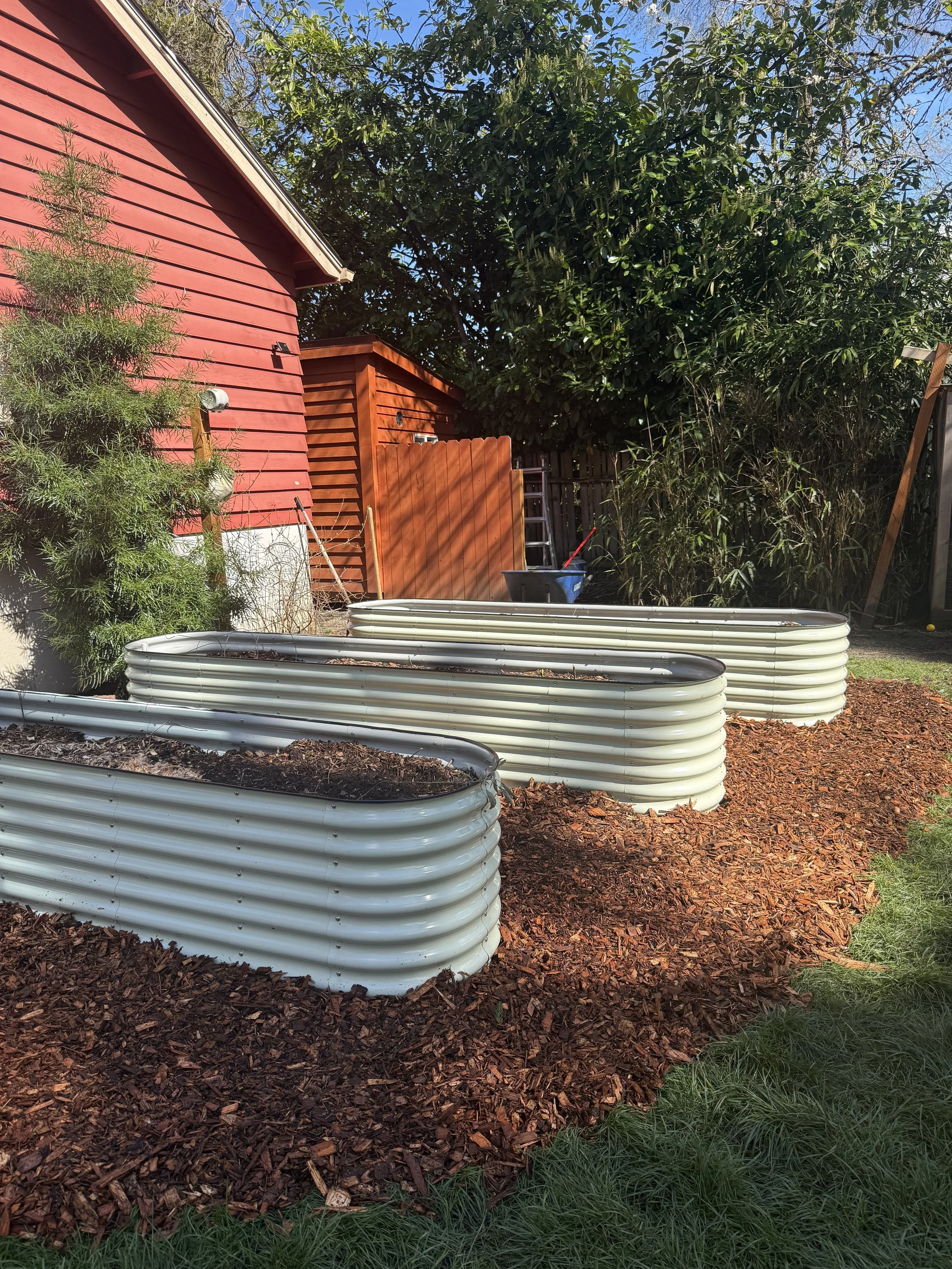
(Left: I opted to kill the grass with cedar chips.)
Once the heavy lifting is done, I fill in the gaps with wood chips, dried leaves, grass clippings and some “contributions” from my chickens too. You just want to create a dense mat that prevents your "good" soil from disappearing into the cracks. Only the top 8 to 12 inches actually need to be high-quality organic raised bed soil. That’s the zone where the roots live, while everything underneath is busy turning into gold for next year’s crop and feeding my favorite backyard worm community.
It’s a bit of a process, and the backyard looks like a construction zone for a day or two, but it’s a system that actually lasts. It’s not about having a perfect, manicured setup—it’s about building a garden that works for you, rather than one you’re constantly having to repair.
How are your beds holding up this year? Are you sticking with wood, or are you starting to see the appeal of the metal swap?